11 hr
Daintree Rainforest & Mossman Gorge Full-Day Adventure
- Expert local guide
- Small group
- Skip-the-line access
- Free cancellation
Daintree River Cruise Crocodile — Estuarine Wildlife Encounters
Where ancient rainforest meets tidal waters, saltwater crocodiles patrol unchanged riverbanks
Compare fares, pick the fit — all bookings are mobile-voucher and eligible for free cancellation where shown.
11 hr
8 hr
9 hr
| Experience | Duration | Rating | Pickup | Skip-the-line | Guide | Small group | Price | |
|---|---|---|---|---|---|---|---|---|
|
Guided Experience
Most popular
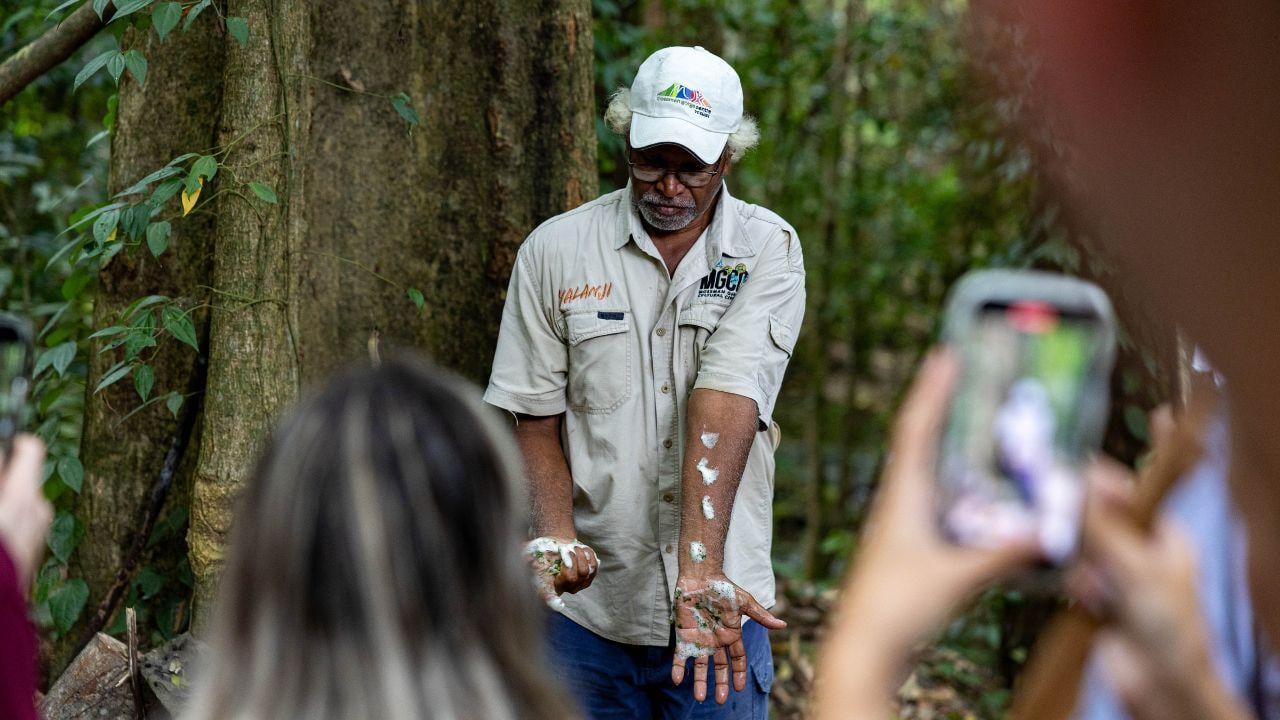
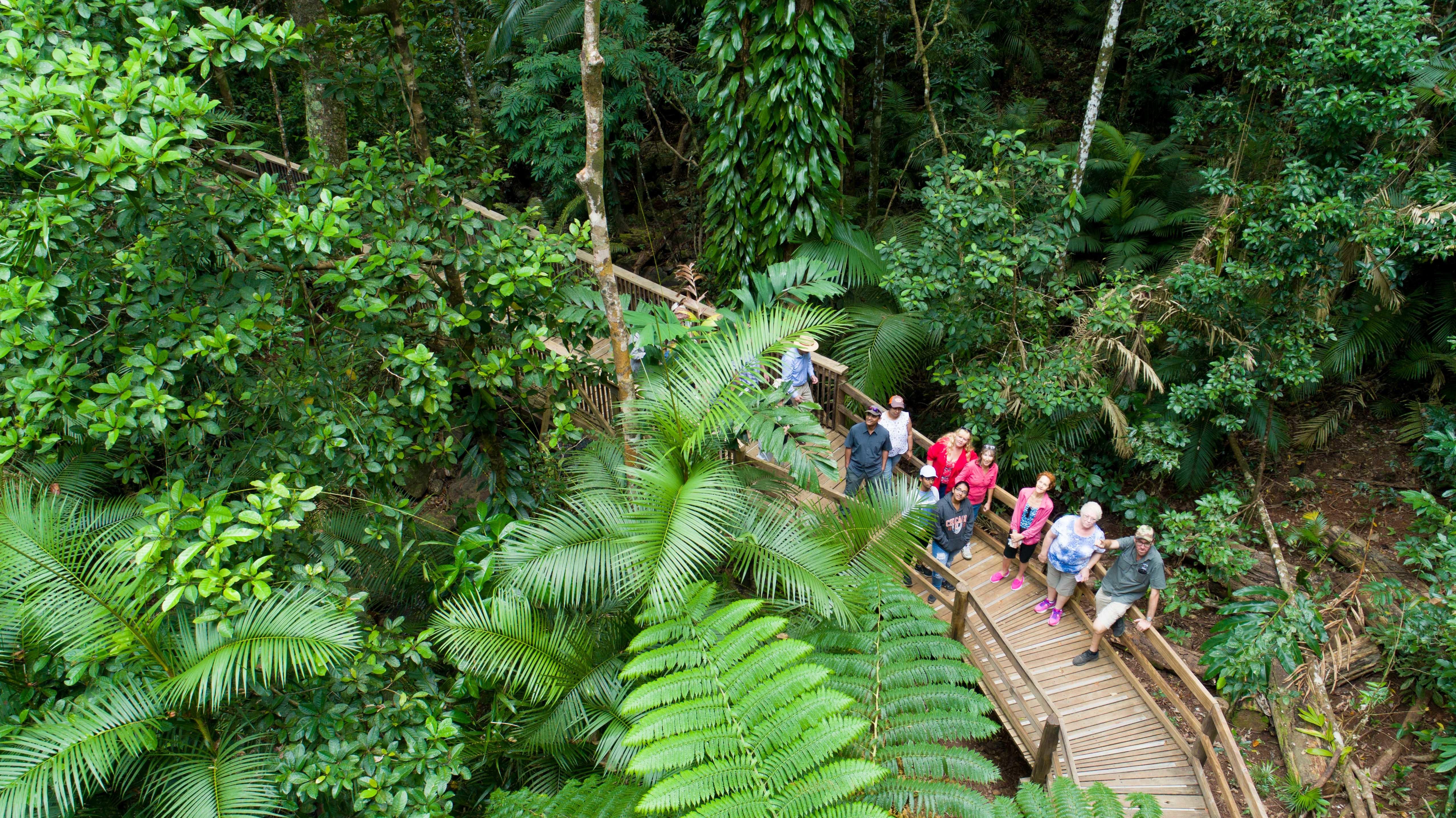
Daintree Rainforest & Mossman Gorge Full-Day Adventure
|
11 hr | ★ 4.6 | ✓ | ✓ | ✓ | ✓ | €148 | Book → |
|
Guided Experience
Daintree Rainforest & Cape Tribulation 4WD Adventure
|
8 hr | ★ 4.6 | ✓ | ✓ | ✓ | ✓ | €148 | Book → |
|
Guided Experience
Daintree Rainforest and Mossman Gorge Day Tour
|
9 hr | ★ 4.8 | ✓ | ✓ | ✓ | ✓ | €164 | Book → |
Worth it for wildlife enthusiasts and photographers
A daintree river cruise crocodile experience delivers strong value if saltwater crocodile sightings rank high on your list. The 39 AUD starting price buys access to one of Australia's most reliable crocodile habitats, with guides who've spent years reading river patterns and animal behavior. Most full-day tours bundle the cruise with rainforest walks and Cape Tribulation access, spreading the per-activity cost across multiple experiences. The river's estuarine ecosystem supports year-round crocodile populations, so sighting odds remain high even outside peak wildlife months. Solo cruise bookings suit travelers prioritizing river time over bundled itineraries. The experience works best for visitors who value expert commentary on crocodile ecology and mangrove systems rather than passive boat rides. Photographers benefit from early morning departures when reptiles bask on exposed mudbanks. Budget-conscious travelers find better per-dollar value in combo tours that include the cruise alongside Mossman Gorge or Cape Tribulation stops, though these compress river time to roughly one hour within a longer schedule.
Bottom line: The daintree river cruise crocodile tours justify the cost for anyone serious about encountering Australia's apex estuarine predator in its natural habitat.
They complement each other, yet most visitors who do both find the river cruise a more thrilling wildlife encounter, while the gorge offers a better immersive rainforest experience. Choosing between these daintree river cruise crocodile tours often comes down to your personal interest in aquatic predators versus refreshing forest walks.
|
Top pick Daintree River Cruise |
Mossman Gorge | |
|---|---|---|
| Primary focus | Crocodile and bird spotting | Rainforest walks and swimming |
| Typical duration | 1–1.5 hours | 1.5–3 hours |
| Starting price | 39 AUD | 0 AUD (park entry is free) |
| Best time to visit | 08:00–10:00 | Early morning or afternoon |
| Main activity | Boat cruise | Self-guided walking trails |
| Physical intensity | Low (seated) | Low to moderate (walking) |
| Visitor experience | Wildlife observation | Nature immersion |
| See tickets & prices |
Verdict: If your priority is high-probability wildlife sightings like saltwater crocodiles, the daintree river cruise crocodile tour is the clear winner, whereas Mossman Gorge is superior for those seeking a tranquil, self-paced rainforest hike.
Hand-picked experiences loved by thousands of travelers
12 hours
Free Cancellation
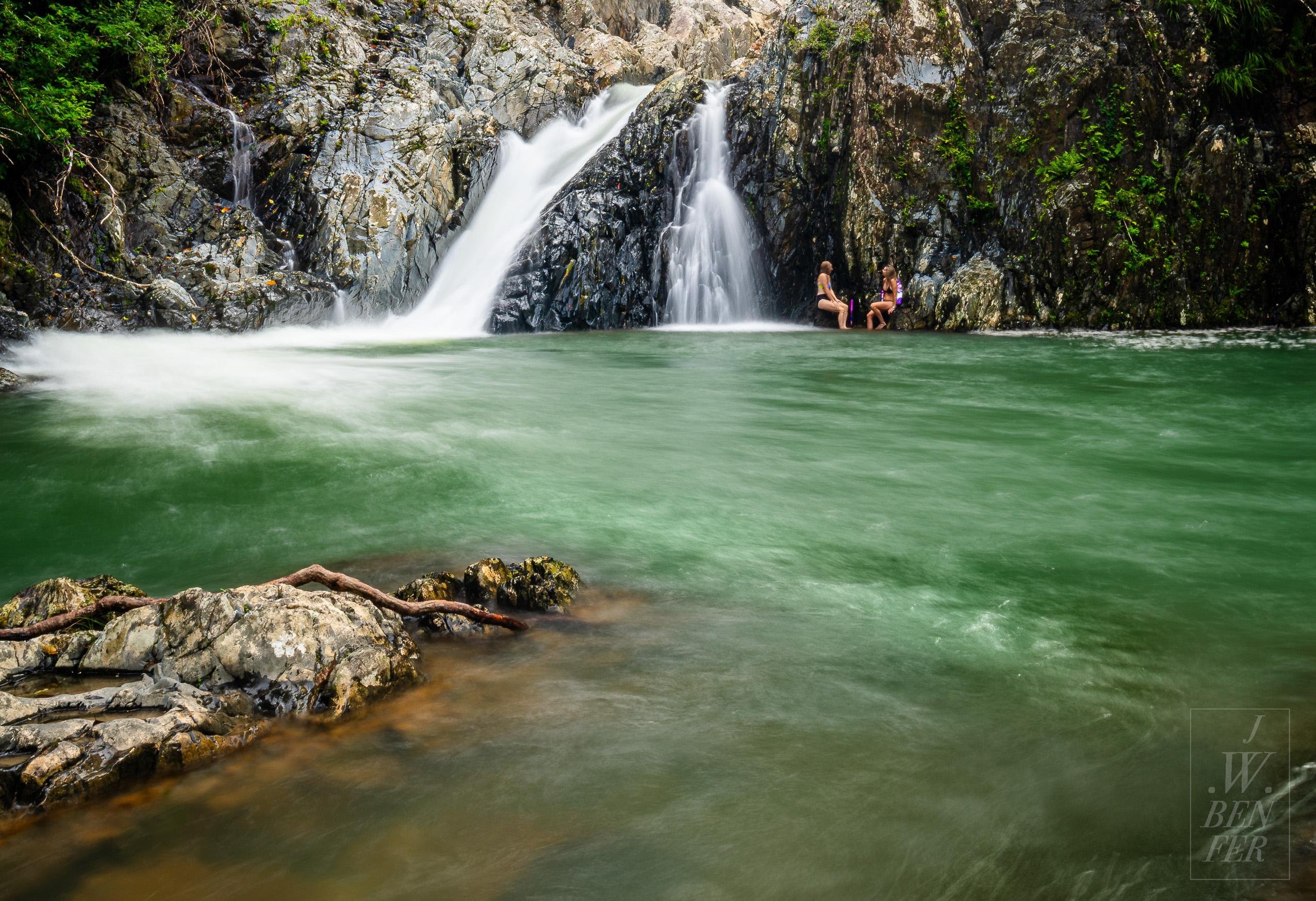
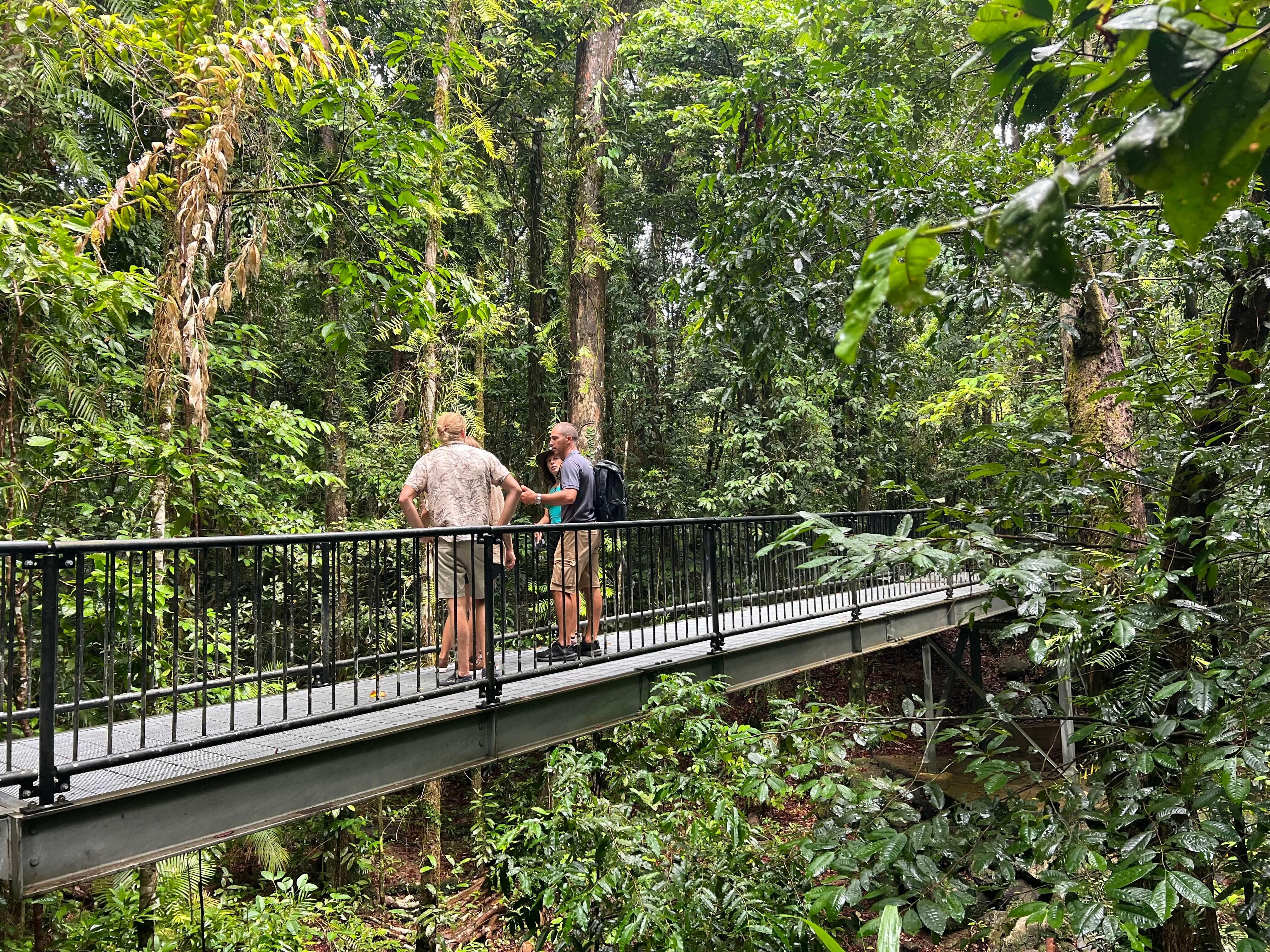
Full-day adventure through ancient rainforest, river cruise to spot crocodiles, and swim at Mossman Gorge
9 hours
Free Cancellation
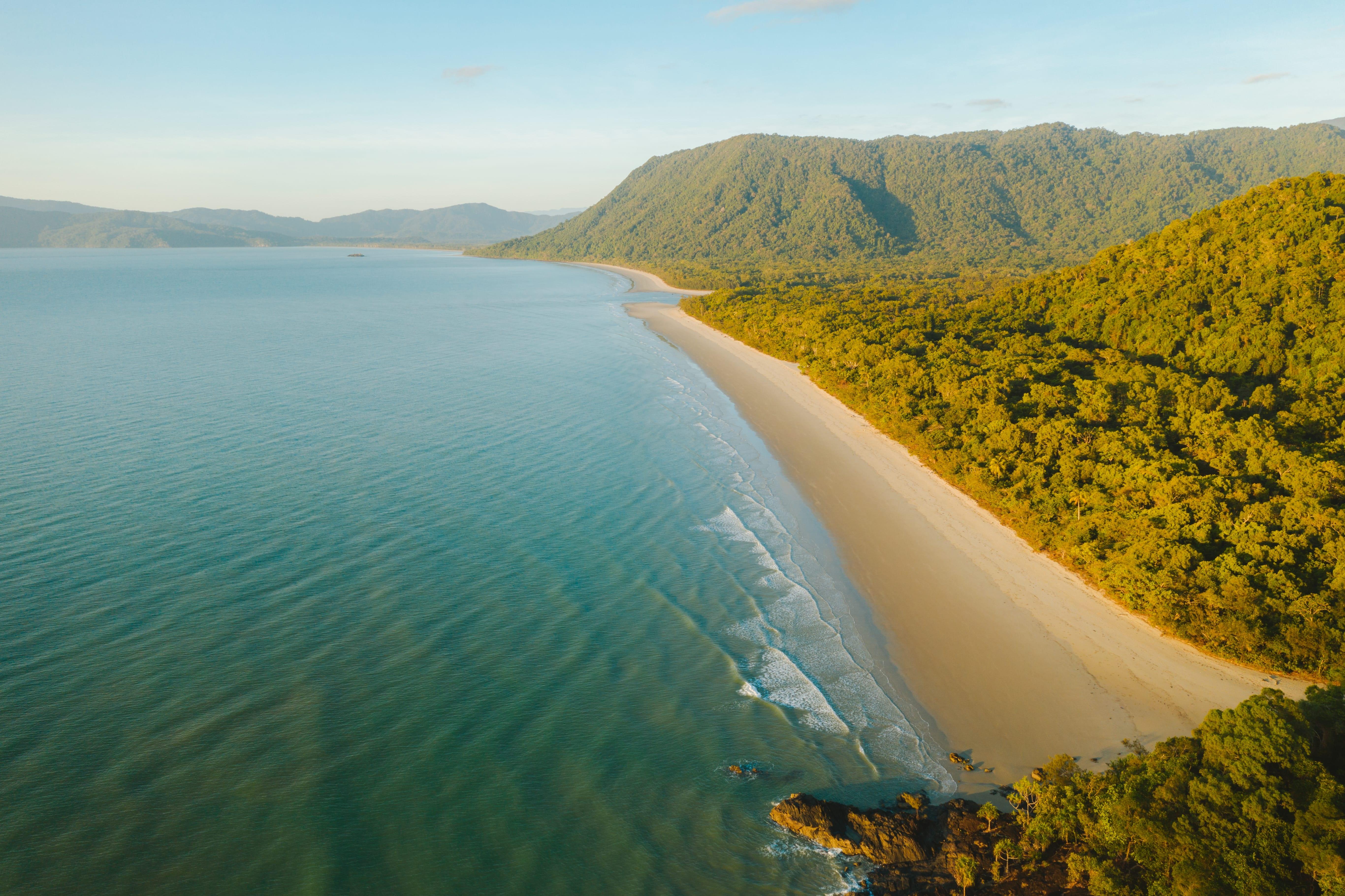
Journey through ancient tropical wilderness, cruise wildlife-rich waterways, and walk beaches where jungle meets reef
1 full day
Free Cancellation
Luxury eco-certified journey through ancient rainforest, river wildlife cruise, and pristine beach
1 hour
Free Cancellation
Encounter crocodiles and rare birds on guided boat journeys through ancient rainforest waterways
1 hour
Free Cancellation
Navigate through ancient mangroves on a guided river journey spotting saltwater crocodiles and tropical wildlife
2 days
Free Cancellation
Discover Australia's natural wonders: snorkel pristine coral reefs and explore ancient tropical rainforest
8 hours
Free Cancellation
Trek to a hidden cascade, savor gourmet rainforest dining, and cruise for crocodiles in Earth's oldest jungle.
6 hours
Free Cancellation
Explore World Heritage rainforest and cruise mangrove waterways seeking crocodiles on this exclusive adventure
Check-in at the designated wharf
Safety briefing and seating
Guided wildlife spotting and estuary tour
Return to the pier
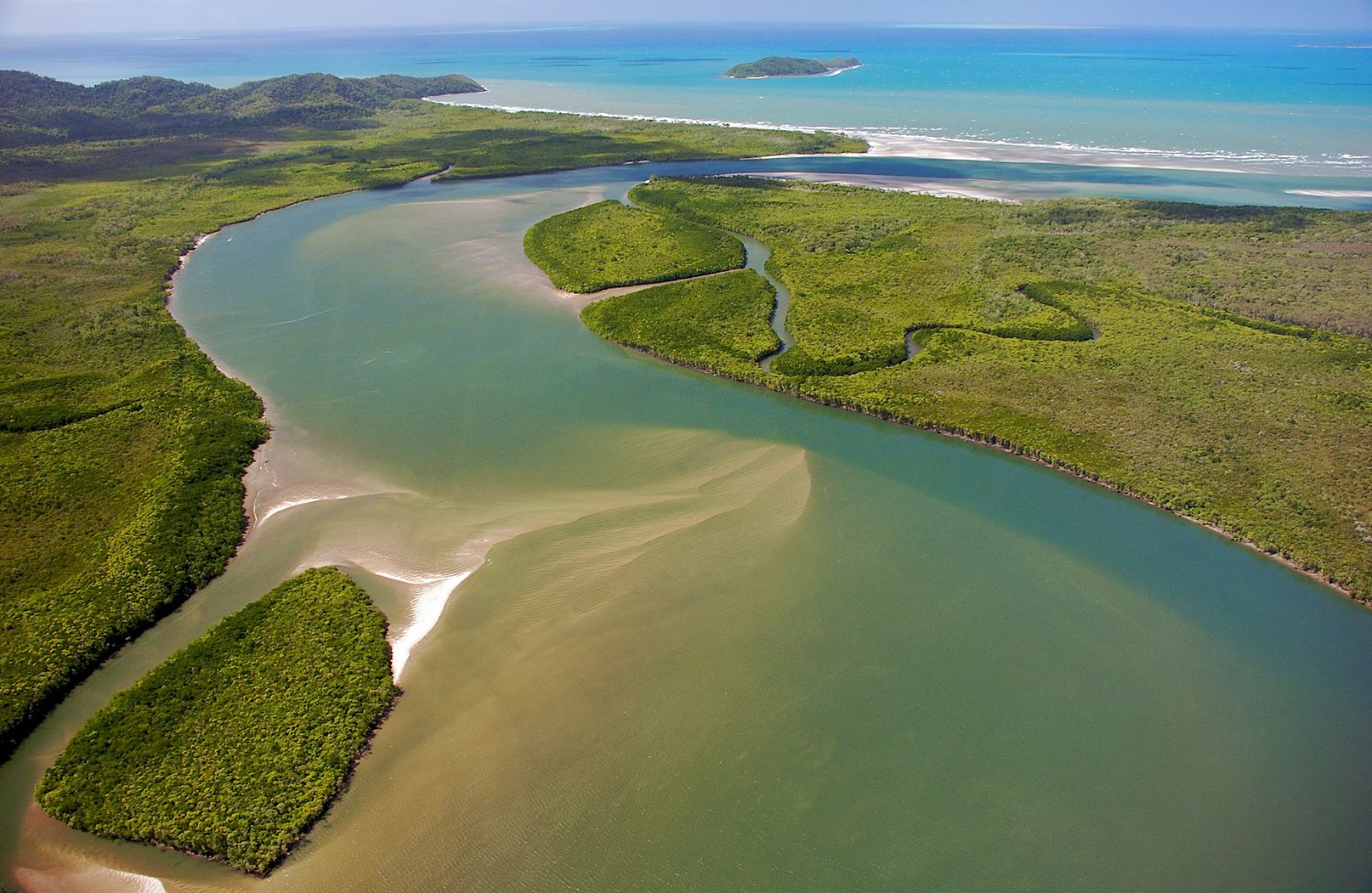
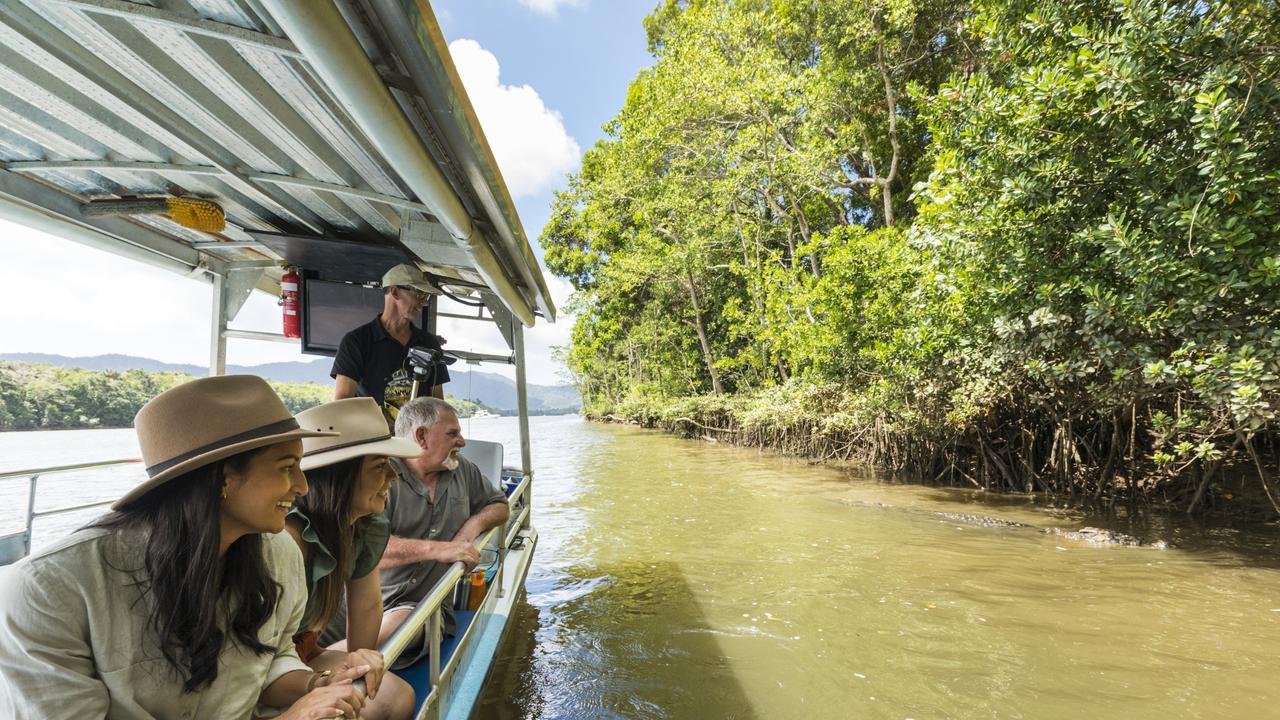
This complex root system provides a vital nursery for juvenile crocodiles and diverse fish species
Mangrove ecosystem
These mounds are carefully constructed by females to protect eggs until hatching season occurs
Crocodile habitat
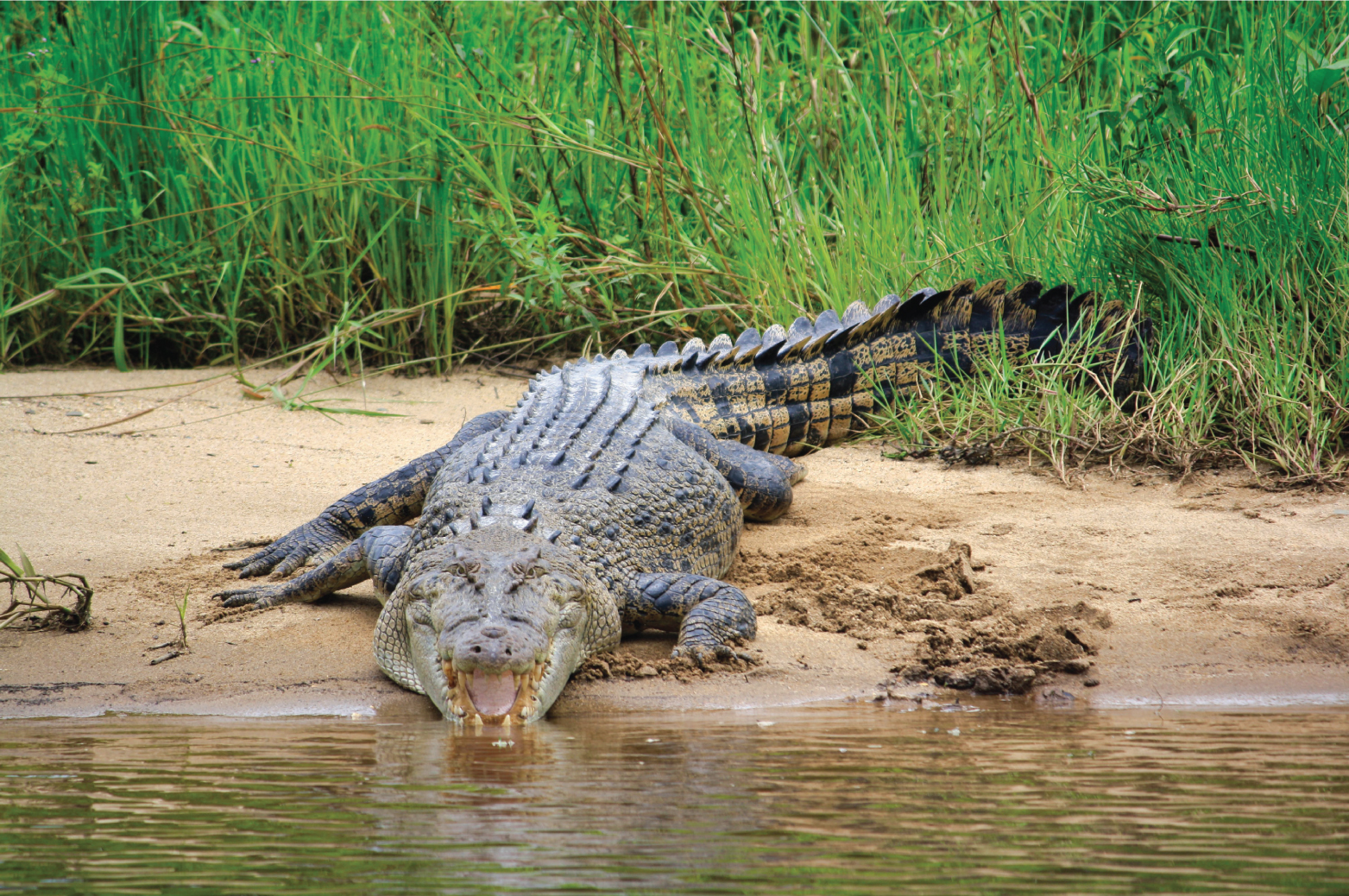
The muddy banks are prime sunning spots for estuarine crocodiles to regulate their body temperature
Daintree River scenery
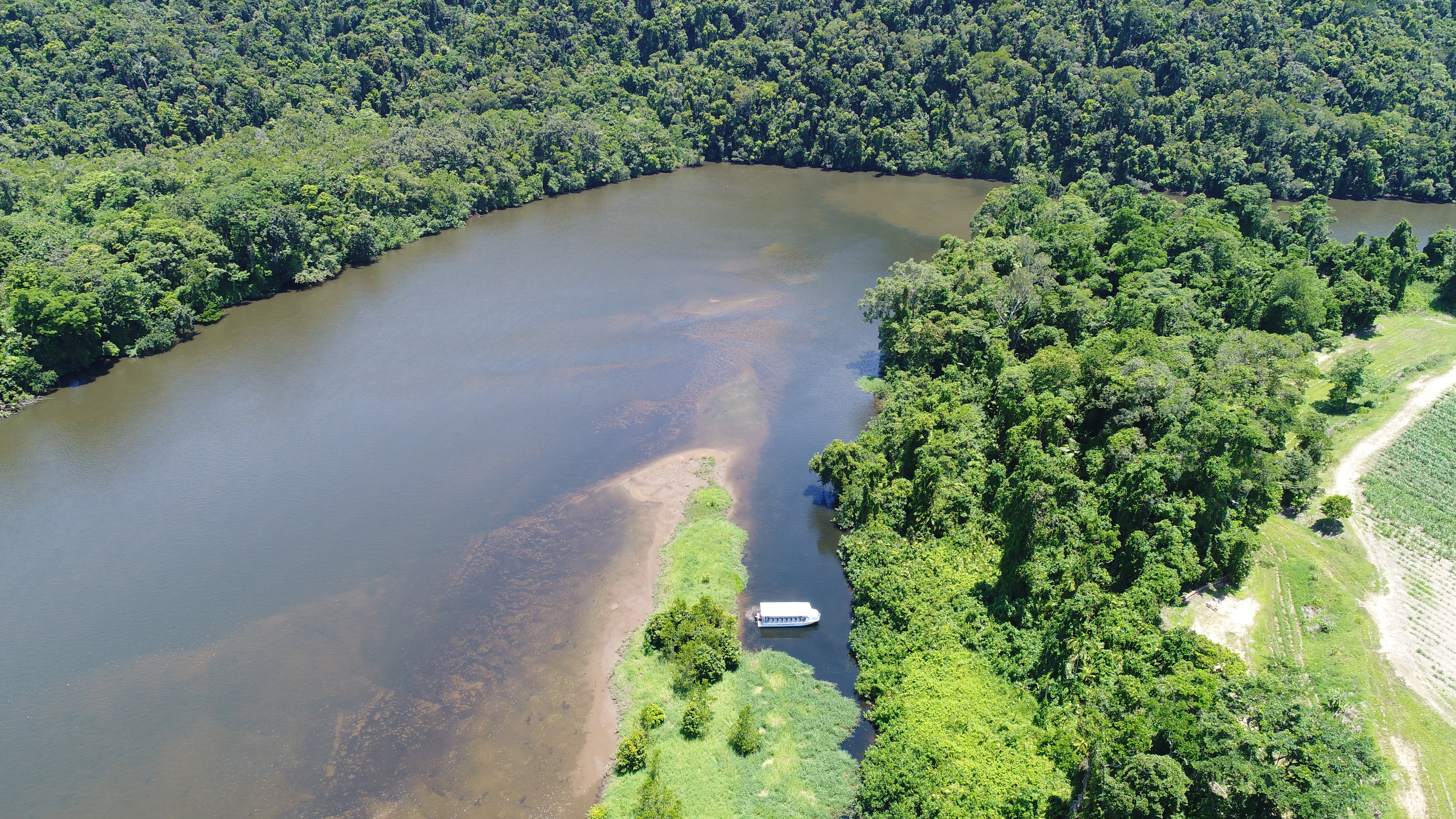
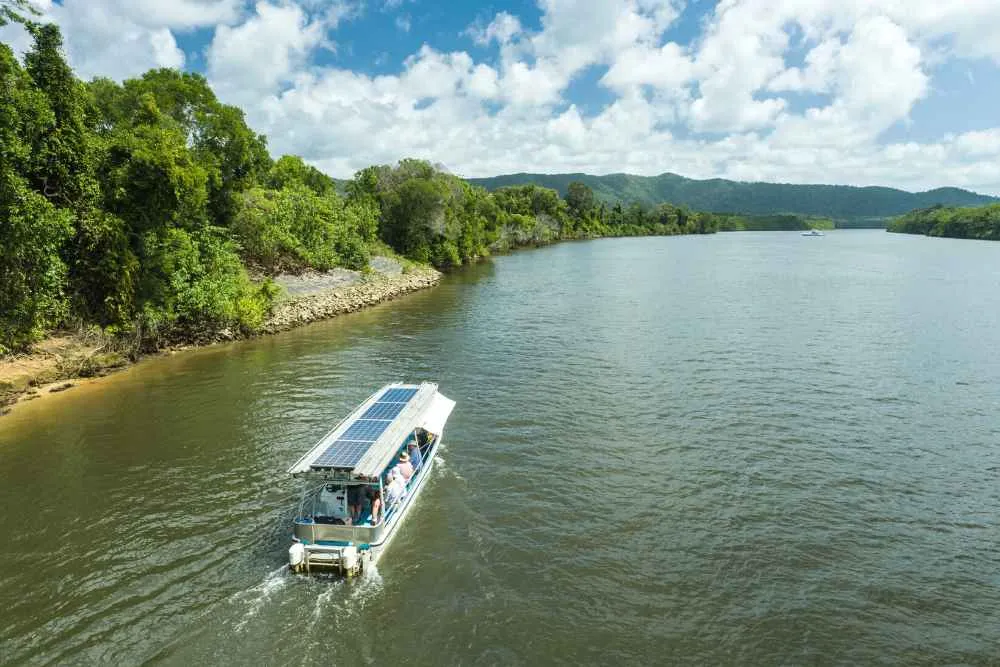
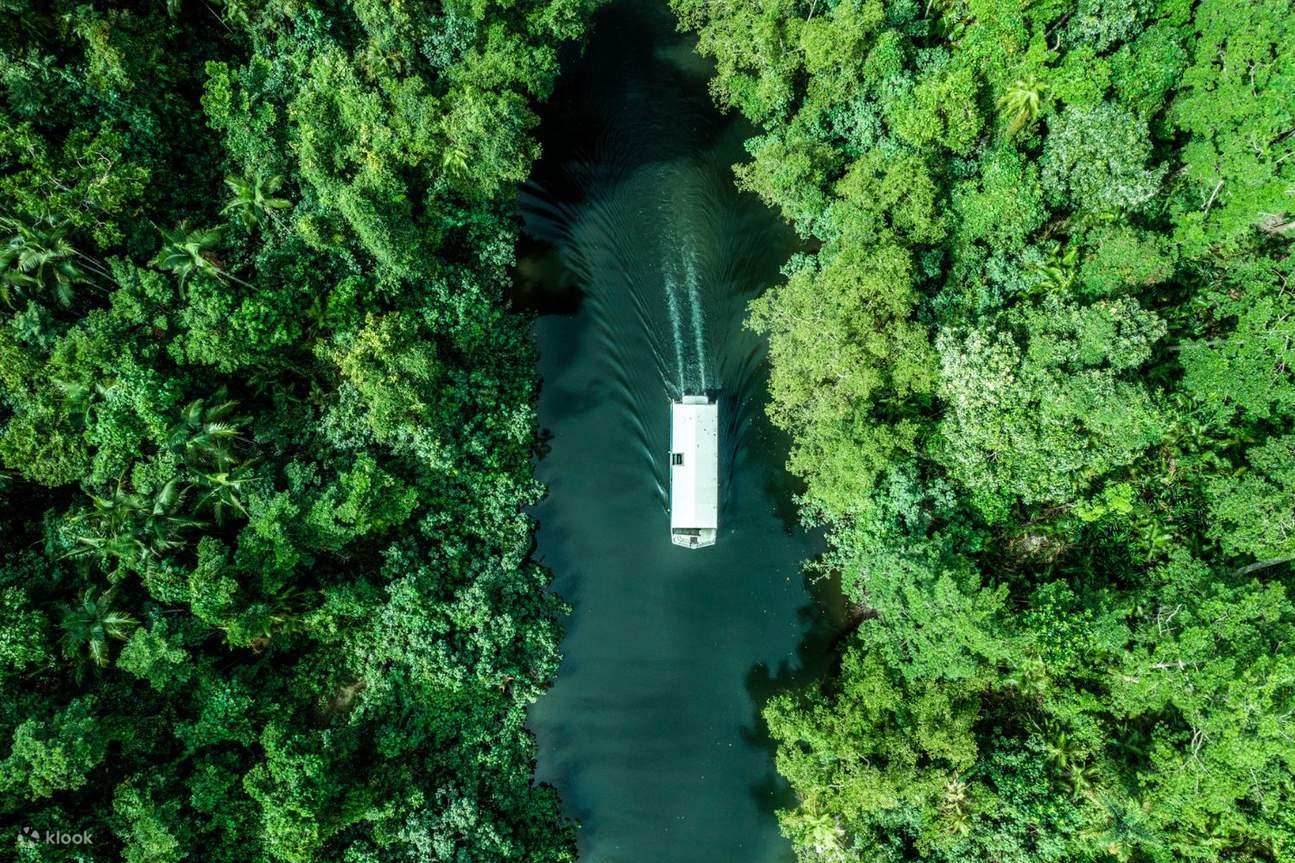
You board at Daintree Village jetty as the 8am departure idles against weathered pilings, the river's glassy surface reflecting paperbark trunks. The vessel motors upstream, its wake rippling through mangrove pneumatophores that spike the mudflats like organic rebar.
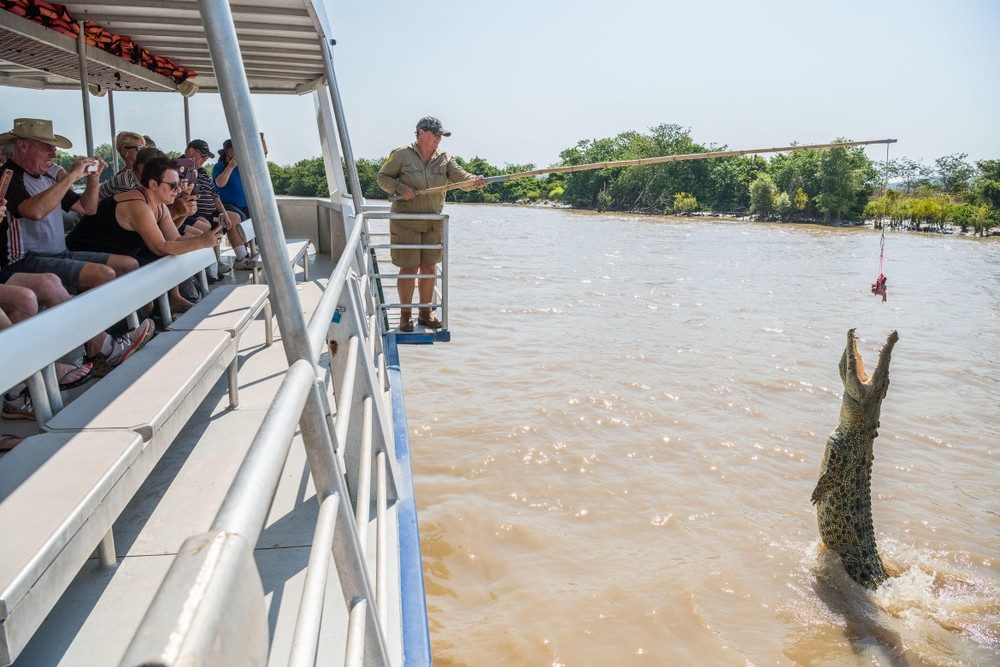
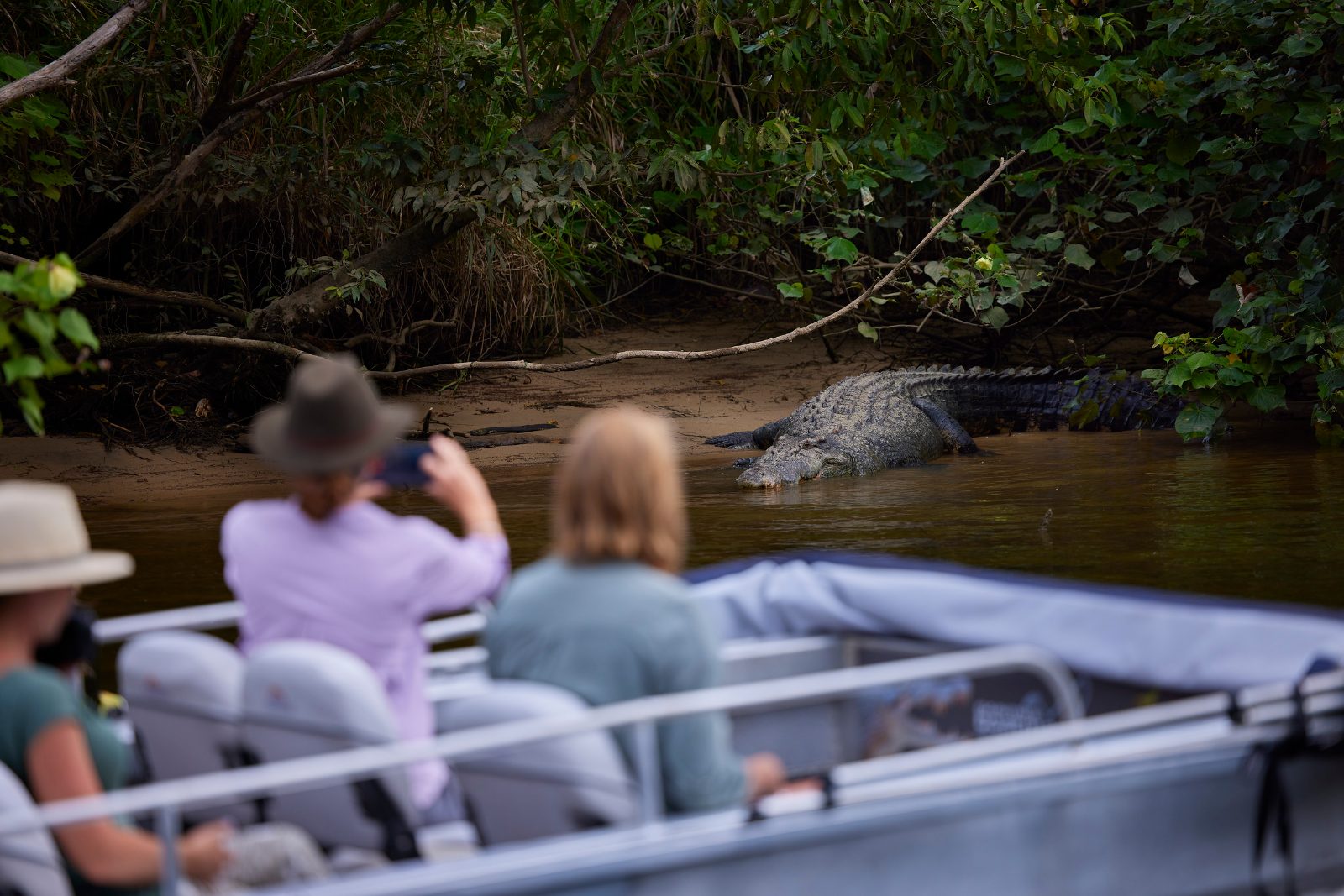
Your guide cuts the engine at the first bend, pointing to a crocodile slide — a smooth clay groove where a large male descended to hunt overnight. Binoculars reveal yellow eyes fixed above the waterline, the crocodile's ridged back camouflaged against submerged logs.
The boat drifts with the incoming tide past flowering mangroves, their root tangles sheltering archerfish and juvenile snappers. A white-bellied sea eagle perches on a dead hardwood, scanning for fish disturbed by the boat's passage. You pass Cable Ferry crossing, where a hand-cranked barge shuttles vehicles over the river's narrowest span. The northern bank rises into unbroken rainforest, fan palms crowding the slope beneath emergent kauri pines. Your guide identifies a fresh crocodile nest — a mounded scrape of mud and vegetation — and explains the temperature-dependent sex determination that governs hatchling ratios.
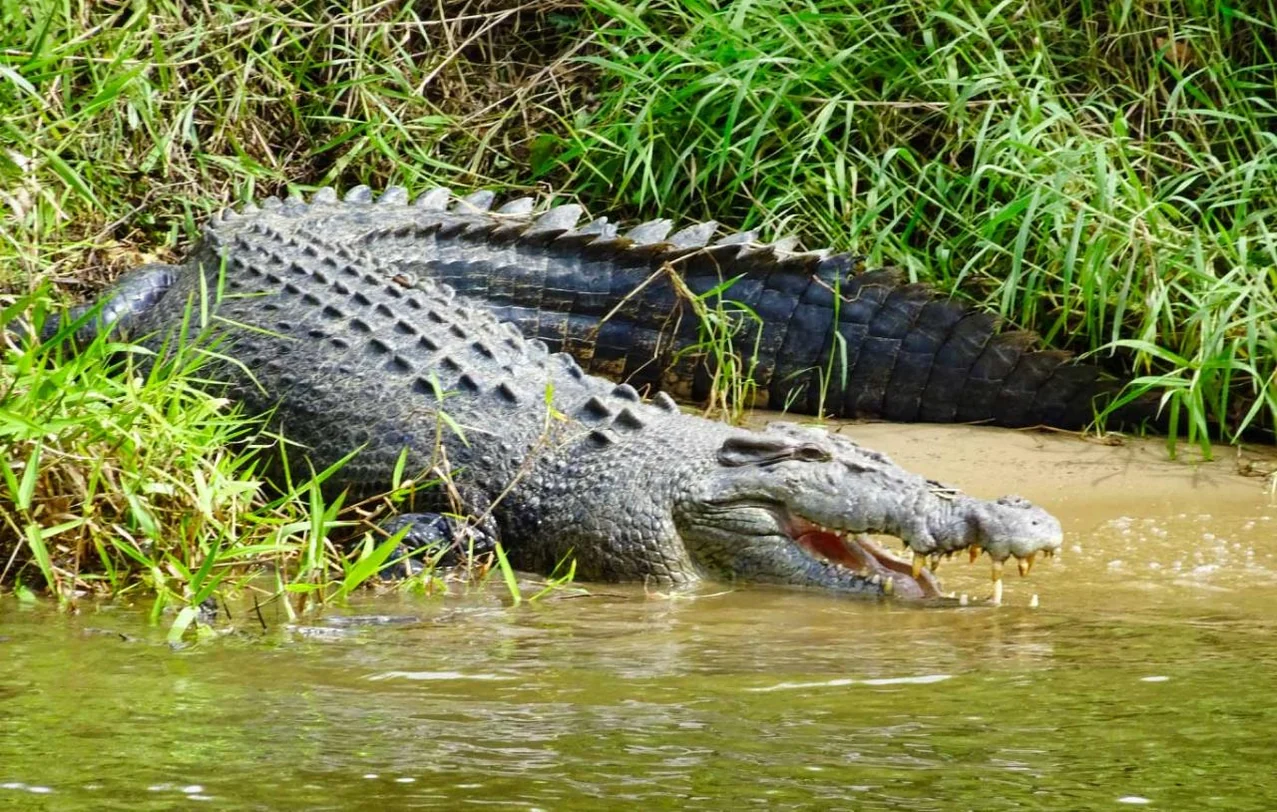
Returning downstream, you pause at a sandbar where a four-metre crocodile basks, its jaws slightly parted for evaporative cooling. The guide notes scute patterns and tail scars that identify this individual from previous seasons. The cruise concludes at the jetty by 10am, the morning's cooler air yielding to equatorial humidity as cicadas begin their midday chorus.
All the details about your upcoming adventure in one place
The Daintree River carries 135 million years of evolutionary memory in its olive-green currents. Flowing 140 kilometres from the Daintree Plateau to the Coral Sea, this tidal estuary harbours Australia's densest population of estuarine crocodiles — some specimens exceeding five metres and weighing over 600 kilograms.
The river divides the world's oldest continually surviving tropical rainforest, a UNESCO World Heritage landscape where Gondwanan flora meets reef ecosystems at the continent's northern edge.
A daintree river cruise crocodile expedition reveals this collision of ancient ecologies. The lower Daintree sustains over 400 bird species, including azure kingfishers, great-billed herons, and paperbark flycatchers that nest in overhanging melaleuca branches. Saltwater crocodiles regulate the estuary's trophic balance, their presence recorded in Aboriginal rock art and oral histories spanning millennia. The Eastern Kuku Yalanji people navigated these waters in bark canoes, reading tide lines and crocodile tracks as seasonal maps. European contact brought cedar loggers in the 1870s, who floated timber rafts downstream to coastal mills. By the 1980s, conservation pressure halted commercial logging, and the Daintree was inscribed as a World Heritage Site in 1988.
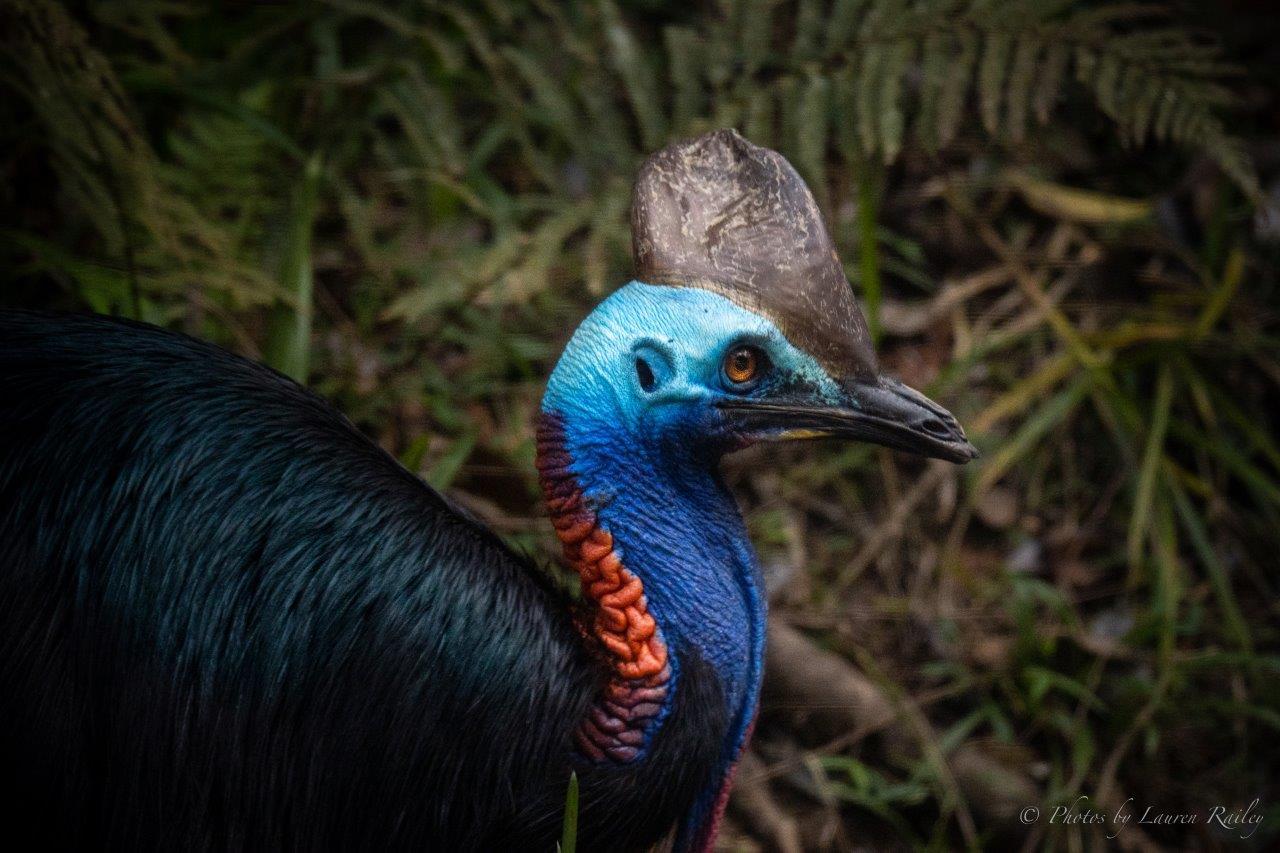
Today's crocodile cruise routes follow the river's tidal reach, where brackish water supports mangrove forests — red, grey, and yellow species create nursery zones for barramundi and mud crabs. Guides interpret mudflat signatures: crocodile slide marks, cassowary prints, and tide-trapped fish that draw hunting reptiles at dawn. The riverbanks preserve fan palms and cycads unchanged since the Jurassic, their root systems stabilising sediment that would otherwise silt the channel. Morning light filters through rainforest canopy gaps, illuminating epiphytic orchids and strangler figs that colonise emergent hardwoods. The river's upper reaches remain roadless wilderness, accessible only by boat, where crocodile populations thrive in conditions approximating pre-human baselines.
Daintree river cruise crocodile tours operate year-round, though the dry season — May through October — concentrates wildlife along permanent water sources. River levels drop, exposing mudbanks where crocodiles bask to regulate body temperature. Wet season floods, from December to March, disperse animals across floodplains, reducing sighting reliability but intensifying the forest's density. The river's ecological integrity depends on this seasonal pulse, which flushes nutrients seaward and resets estuarine salinity gradients that mangroves require.
The Daintree River harbours Australia's densest population of estuarine crocodiles — some specimens exceeding five metres and 600 kilograms
Wear light, breathable clothing suitable for tropical heat and humidity. Comfortable footwear is recommended for boarding your daintree river cruise crocodile tour.
Small personal bags are permitted on board, but large suitcases are not suitable for these vessels. Keep all belongings secured during your daintree river cruise crocodile excursion.
Photography is encouraged during the daintree river cruise crocodile experience. Use a zoom lens to capture wildlife from a safe and respectful distance.
The daintree river cruise crocodile tours are educational and suitable for families. Children must be supervised at all times near the water edge.
Some vessels offer boarding assistance, but infrastructure varies along the riverbank. Contact your operator regarding mobility requirements for your daintree river cruise crocodile.
No food is served on most short cruises, though water is recommended. Please keep the environment clean by taking all trash with you.
Opening Hours
08:00–16:00
Address
Daintree River, Daintree, QLD 4873, Australia
Accessibility
Varies by vessel; contact operator
Best Arrival
08:00–10:00
Storage
Limited space on boats
Region
Daintree Rainforest ecosystem
Car · 60-90 min · Varies by rental
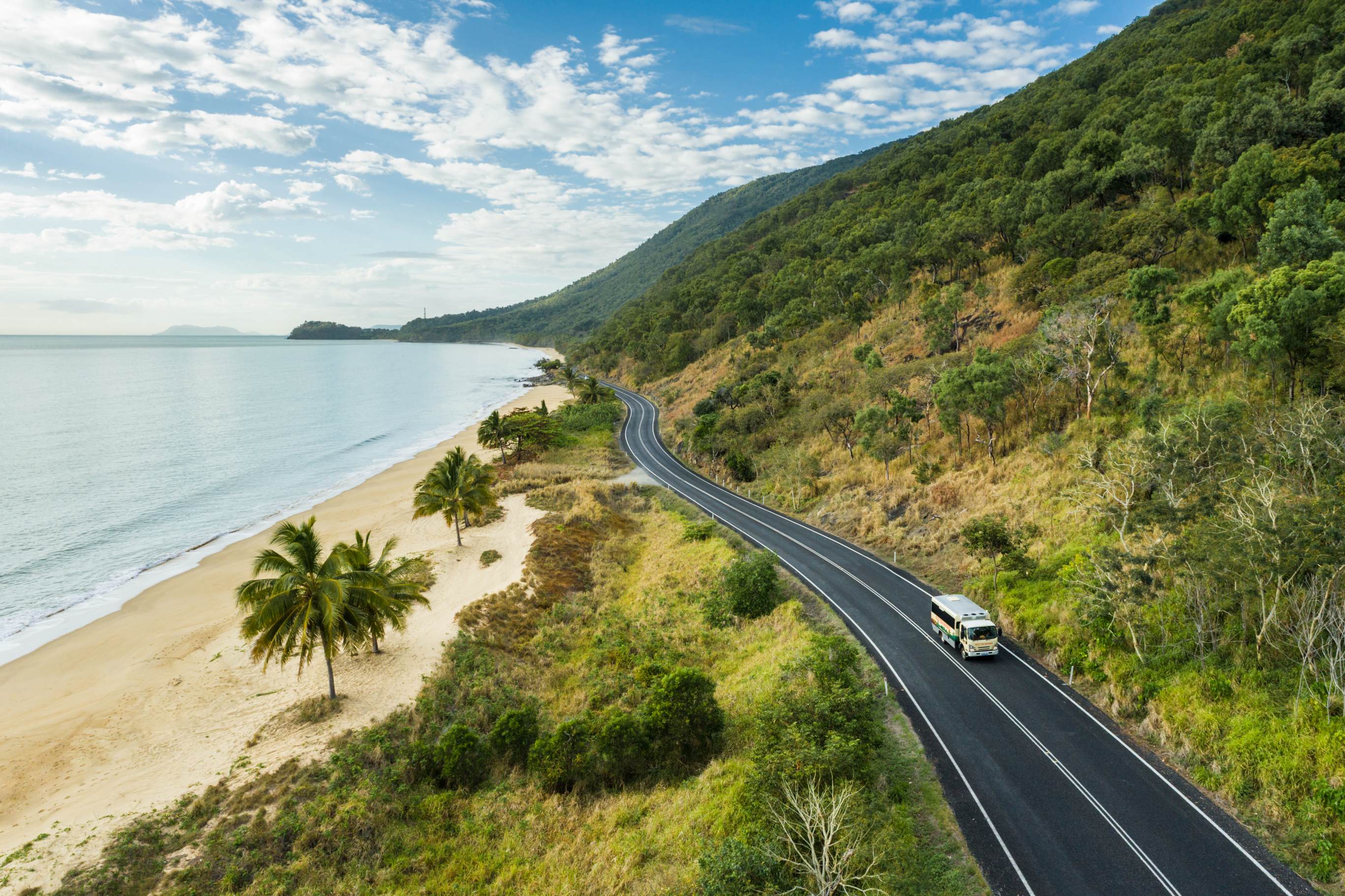
Follow Captain Cook Highway north toward the Daintree River ferry crossing.
Full refunds are typically available for daintree river cruise crocodile tickets canceled at least 24 hours in advance. Cancellations within this window may forfeit the 39 AUD base fee.
Recommended time
2-3 hours
Planning your daintree river cruise crocodile experience requires balancing your arrival with the natural rhythms of the estuary. The best arrival window: 08:00–10:00 — Early morning offers cooler temperatures and higher wildlife activity before peak midday heat. Guests booking daintree river cruise crocodile tours should allow time to reach the Daintree River, Daintree, QLD 4873, Australia jetty and check in for their voyage. Those purchasing daintree river cruise crocodile tickets often find that an early start avoids the afternoon swell of sightseers along the mangroves.
Crowd levels through the day
Weather · crowds · average price — dots go green to amber to red as each metric rises.
September offers pleasant temperatures and clear conditions for spotting estuarine crocodiles on the banks.
Expect high humidity and occasional tropical rain showers throughout the wet season.
Temperatures begin to drop as the dry season transitions, ideal for quiet wildlife watching.
Cooler mornings provide excellent visibility and comfortable boat conditions for all visitors.
Bring high-quality binoculars to observe crocodiles resting on distant mudflats.
Book the earliest slot to see reptiles sunning themselves before the heat peaks.
Remain still and quiet to increase the likelihood of sighting shy river wildlife.
Ask the operator how tide levels influence the visibility of crocodiles during your visit.
High UV levels are common; apply sunscreen before boarding your boat.
Daintree River, QLD 4873
Follow signs to specific operator wharf
Get directionsThe Daintree River has carried saltwater crocodiles for millennia, but organized river cruises emerged only in the late 1970s when ecological tourism began replacing logging as the region's economic anchor. The first commercial operators launched small motorized dinghies in 1978, guiding handfuls of visitors through mangrove corridors that had been timber barges' domain a decade earlier. Early daintree river cruise crocodile expeditions relied on local fishermen who knew tidal patterns and basking sites, though safety protocols were minimal and sightings unpredictable. The Wet Tropics World Heritage listing in 1988 transformed the river from a working waterway into a protected habitat, and operator numbers doubled within three years. Infrastructure improved through the 1990s as purpose-built pontoons replaced improvised jetties and flat-bottomed vessels gave way to stable catamarans designed for wildlife observation. A 1996 incident in which a cruise vessel struck submerged debris during king tide prompted the Queensland government to mandate vessel inspections and captain certifications specific to estuarine environments. By 2003, the river hosted twelve licensed operators, and daintree river cruise crocodile tours had become the region's highest-revenue visitor activity, surpassing canopy walkways and Cape Tribulation day trips combined. Operators adopted GPS tracking in 2011 to monitor crocodile territories and avoid disturbance to nesting females, a practice that also improved sighting consistency for passengers. Today the Daintree River supports a resident population of approximately 70 saltwater crocodiles, with individuals identified by tail markings and territorial behaviors documented across two decades of cruise logs. The largest recorded specimen, a 5.2-meter male known locally as Scarface, has occupied the same mid-river basin since 2009. Cruise schedules now align with tidal cycles and seasonal feeding patterns, knowledge refined through decades of observation that began when the first motorized dinghies pushed off from muddy banks in the late 1970s.
First commercial river cruises launch using small motorized dinghies piloted by local fishermen.
Wet Tropics World Heritage listing transforms the river into a protected habitat and doubles operator numbers.
Queensland mandates vessel inspections and captain certifications after a king-tide collision with submerged debris.
Twelve licensed operators establish river cruises as the region's highest-revenue visitor activity.
A 5.2-meter male crocodile, later named Scarface, claims a mid-river territory he still occupies today.
GPS tracking systems are adopted to monitor crocodile territories and reduce disturbance to nesting sites.
Stand at the very front of the vessel to capture unobstructed shots of the water surface. This position provides the widest angle for spotting an estuarine crocodile resting on the mud banks.
Position yourself near the middle of the boat to frame wildlife against the dense, twisting roots of the ancient rainforest. This vantage point helps when framing a daintree river cruise crocodile within the complex shadows of the vegetation.
Choose the starboard side to monitor the sunlit banks where reptiles often bask during daintree river cruise crocodile tours. Keep your shutter speed high to compensate for boat vibration when securing daintree river cruise crocodile tickets.
The rear of the boat offers a stable platform to capture wake reflections and birds trailing the vessel. It is an ideal spot for wide-angle shots after completing your daintree river cruise crocodile tour.
Embarking on a daintree river cruise crocodile adventure provides children a rare opportunity to observe estuarine wildlife in their natural habitat. Parents can expect a calm, educational journey through the rainforest waterway, perfect for curious young explorers.
Life jackets are mandatory for all children on board, and it is vital to keep all arms and legs inside the boat at all times.
Toddlers and school-aged children typically enjoy this daintree river cruise crocodile tour, as the focused nature of wildlife spotting keeps them engaged for the duration of the trip.
Bring binoculars to help little ones focus on the riverbanks, where searching for ancient reptiles becomes an exciting scavenger hunt.
Please note that standard bathroom amenities are limited once you depart, so ensure children use the facilities before boarding for your daintree river cruise crocodile tickets.
To maximize your chances of success, aim for the 08:00–10:00 arrival window when early morning coolness keeps the animals active near the water.
Pack hats and plenty of water for these daintree river cruise crocodile tours, as the tropical sun can be intense even during shorter excursions.
Visitors planning a daintree river cruise crocodile experience will find limited dining options directly at the riverbank, so many travelers prefer to stop at cafes in the nearby township. Securing your daintree river cruise crocodile tickets early allows you to enjoy a meal before or after observing the local apex predators in their natural habitat.
This historic venue offers hearty pub meals and refreshing beverages. It serves as a convenient base for those arriving for a daintree river cruise crocodile tour.;DAINTREE ICE CREAM COMPANY
Everything you need to know for your journey
The Daintree River site is open daily from 08:00–16:00.
Yes, these tours are family-friendly and offer a great learning experience for all ages.
It is highly recommended to book your daintree river cruise crocodile tickets online to ensure availability.
The best arrival window is 08:00–10:00 to see more active wildlife in cooler conditions.
While sightings are frequent, wildlife behavior is natural and cannot be guaranteed on any boat trip.
Cancellations made 24 hours prior are eligible for a refund of the 39 AUD base price.
Dress for warm weather with sun protection, as boats are often exposed to the elements.
Small snacks and water are generally fine, but please carry all rubbish out to protect the river.
You may also spot various bird species, snakes, and occasionally tree kangaroos or butterflies.
The river is accessible by car, typically via the Captain Cook Highway heading north.
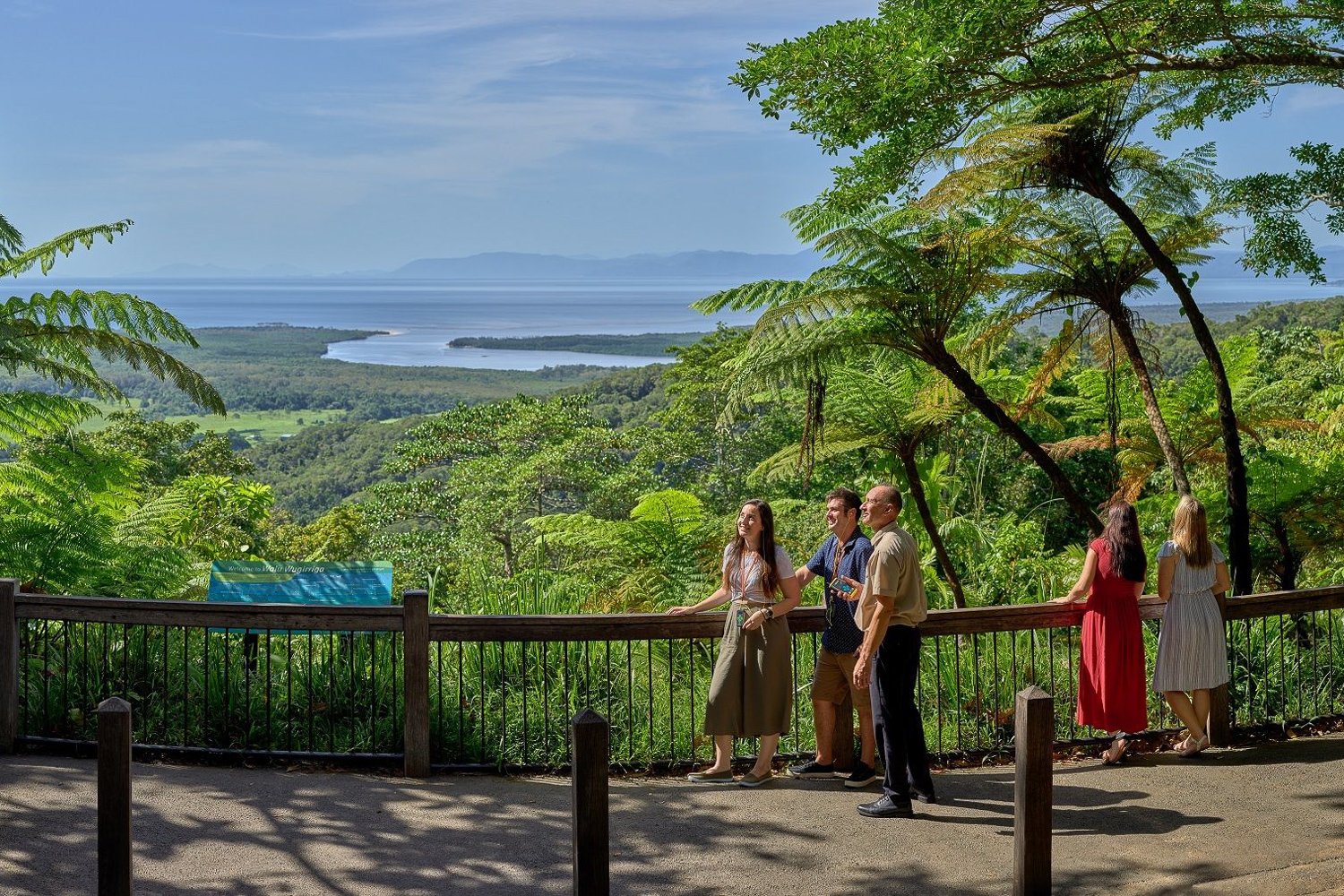
Ancient ecosystem with high biodiversity and boardwalks.
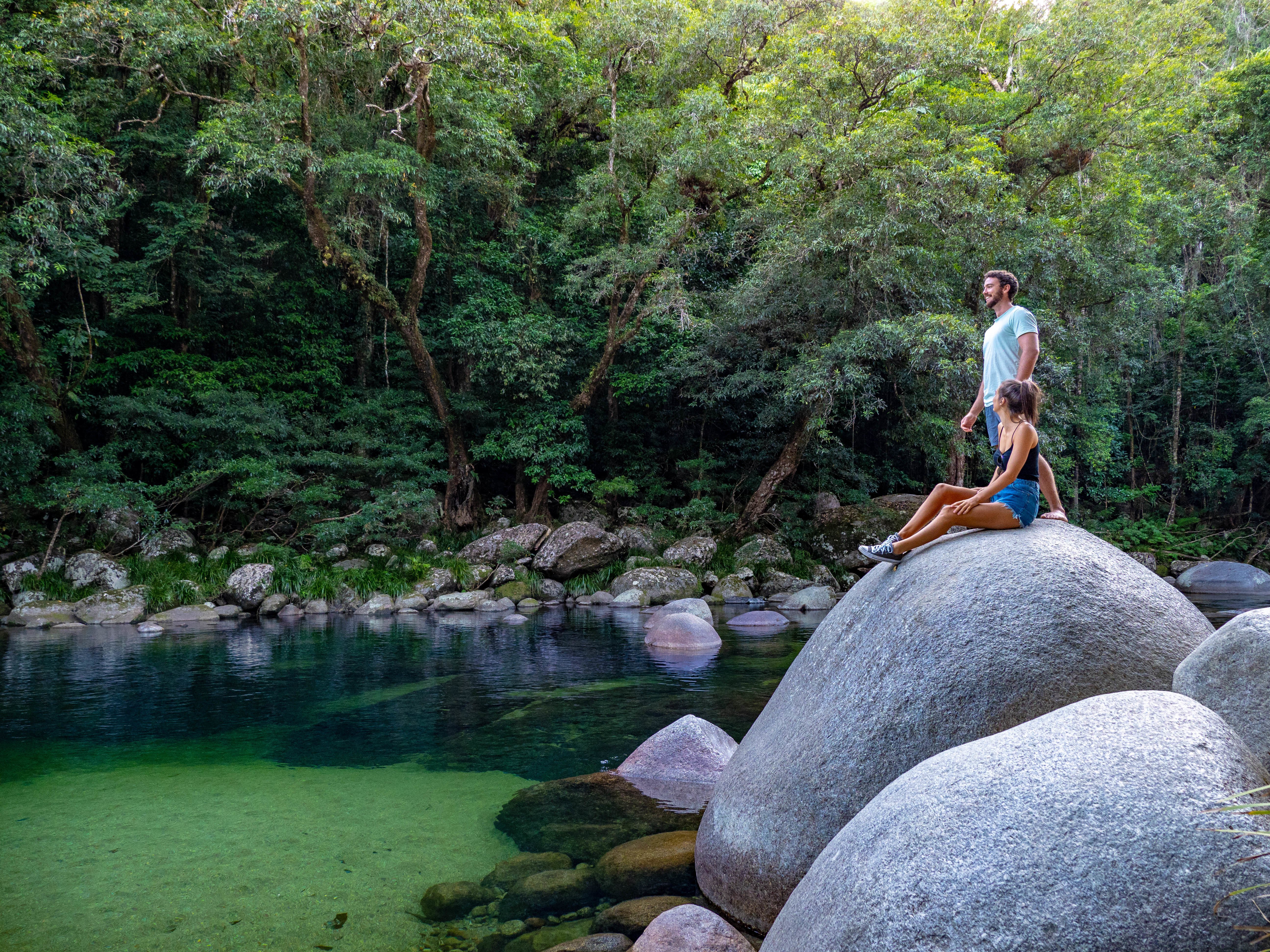
Clear river water flowing over granite boulders.
Location where the rainforest meets the Great Barrier Reef.
Quiet local stay options close to river operators.
Upscale lodging located south of the river.
Join thousands of happy travelers who have discovered this incredible experience
Book Your Experience Now